Research Article | | Peer-Reviewed

Influence of Sand Particle Size Distribution on the Properties of Mortars Subjected to Various Temperatures

Received: 1 October 2025     Accepted: 16 October 2025     Published: 31 October 2025
Views:       Downloads:
Abstract

The durability of concrete and mortar structures against extreme thermal stress is a major concern in Civil Engineering. This present experimental study aims to critically assess the influence of sand particle size distribution on the physico-mechanical and hydric characteristics of mortars after exposure to different temperatures. Cubic mortar specimens measuring 70 x 70 x 70 mm were manufactured using two types of sand (fine and coarse) of the same mineralogy, with a Sand/Cement ratio of 3 and a Water/Cement ratio of 0.5. The samples were subjected to five temperature levels: 20, 100, 150, 200, and 250°C. After cooling down to ambient temperature, several properties were measured, including mass loss, dimensional changes, bulk density, water absorption by immersion (total porosity), water absorption by capillarity, and compressive strengths. The results reveal a systematic influence of particle size: mortars made with fine sands exhibit a higher mass loss and consistently lower compressive strengths than those made with coarse sands, regardless of the applied temperature. In terms of hydric durability, fine sand mortars show lower water absorption by immersion (lower total porosity) but a higher absorption by capillarity, which indicates a microstructure characterized by finer but more interconnected pores, thereby favoring micro-cracking under thermal stress. In conclusion, the study demonstrates that sand particle size is a determining factor in the post-thermal performance of mortars, and the use of coarse sands is preferable to ensure better mechanical stability and increased resilience for structures exposed to temperatures up to 250°C.

Published in Advances in Materials (Volume 14, Issue 4)
DOI 10.11648/j.am.20251405.11
Page(s) 88-94
Creative Commons

This is an Open Access article, distributed under the terms of the Creative Commons Attribution 4.0 International License (http://creativecommons.org/licenses/by/4.0/), which permits unrestricted use, distribution and reproduction in any medium or format, provided the original work is properly cited.

Copyright

Copyright © The Author(s), 2025. Published by Science Publishing Group

Keywords

Particle Size Distribution, Fine Sand, Coarse Sand, Mortar, Temperature

1. Introduction
Mortar is an essential mixture in the construction industry, commonly used for various applications, including jointing, repair, and finishing of masonry surfaces . Its performance, such as mechanical strength and durability, is intrinsically linked to the quality and properties of its constituent materials . Among these constituents, sand, as the principal aggregate, plays a predominant role. The sand Particle Size Distribution, which is the distribution of the sizes of its grains, directly influences the compactness, workability, porosity, and ultimately, the final characteristics of the mortar . A well-graded sand, featuring a varied distribution of grain sizes, generally allows for the production of a denser, more resistant mortar requiring less water, thereby optimizing its setting and hardening properties .
In parallel, structures and building materials are inevitably exposed to significant temperature variations throughout their lifecycle, from the placement phase to their aging. These thermal fluctuations, whether due to seasonal climatic conditions, accidental fires, or specific industrial processes, can profoundly alter the physical and mechanical properties of mortars. Differential thermal expansion of the components, binder dehydration, and microstructural changes are all phenomena likely to affect the material's performance. Understanding these mechanisms is crucial for designing resilient and durable structures capable of withstanding varied and extreme thermal environments. High temperatures, in particular, can lead to a significant reduction in strength, cracking, and disintegration of the mortar , while freeze-thaw cycles can cause progressive structural damage.
While numerous previous studies have already addressed the influence of either sand or the isolated impact of elevated temperatures on the properties of mortars or concretes, the complex interaction between these two factors—sand as a compositional variable and temperature as an environmental constraint—remains an area requiring deeper investigation for a holistic understanding.
This article aims to explore the combined effect of sand PSD and exposure to different temperatures on the characteristics of mortars. It will examine how the sand's fineness or coarseness influences key properties, including mass loss, water absorption (by immersion and by capillarity), compressive strength, density and dimensional stability of the mortars. The objective is to better understand these complex interactions in order to optimize mortar formulation, enhance its resilience to thermal stresses, and predict its behavior under various environmental conditions, thus contributing to the advancement of knowledge in construction materials science.
2. Materials and Methods
2.1. Materials
2.1.1. Sand
Two (02) types of sands, sharing the same mineralogy, were used for this work. Specifically, two (02) fine sands (SNF1 and SNF2) and two (02) coarse sands (SGR1 and SGR2) were utilized. Their geotechnical properties are presented in Table 1 below:
Table 1. Geotechnical properties of the different sands used in mortar production.

Geotechnical Properties

FINE SAND

COARSE SAND

Sand SNF1

Sand SNF2

Sand SGR1

Sand SGR2

Fineness Modulus

1.39

1.52

2.72

2.74

Uniformity coefficient

2.40

2.23

5.28

5.09

Curvature coefficient

0.95

0.94

1.48

1.88

Apparent bulk density (g/cm3)

1.51

1.54

1.5

1.52

Absolute density (g/cm3)

2.61

2.61

2.61

2.60

Sand Equivalent (%)

91.23

89.34

92.24

93.05

Methylene blue value (g/100g)

0.050

0,05

0.025

0.025

Specific Surface Area (m2/g)

10.5 x 10⁻⁴

10.5 x 10⁻⁴

5.2 x 10⁻⁴

5.2 x 10⁻⁴

2.1.2. Cement
The cement used in this study is a Type CEM II cement of the 32.5R class. Its physicochemical properties are detailed in Table 2 below:
Table 2. Physicochemical properties of the cement used in mortar production.

Propertie

Setting Time (min)

Mixing Water Content (%)

Le Chatelier Expansion (mm)

SSB (Fineness)

Loss on Ignition

SO3 Content (%)

Cl Content (%)

Mean Value

138

26,45

2,31

4177

8,52

2,1

0,05

2.2. Methods
2.2.1. Mortars Formulation
The mortars were formulated using fixed ratios of Sand/Cement=3 and Water/Cement=0.5. The fresh mortar mixture was then cast into molds with dimensions of 70×70×70 mm and kept there for 24 hours. After demolding, the mortar specimens were cured by immersion in water for 28 days.
2.2.2. Heating Procedure
Once the specimens had reached 28 days of curing, they were dried and subsequently subjected to four heating-cooling cycles in an oven at temperatures of 100°C, 150°C, 200°C, and 250°C. Each cycle consisted of three (03) phases: a temperature rise, a stabilization period at the constant target temperature for one hour, and finally, cooling back down to ambient temperature. The heating rate was set at 3°C /min, in accordance with standard ISO/TR 15655 .
2.2.3. Mass Loss
The mass loss was determined by weighing the specimens before and after exposure to the temperature using an electronic balance with a precision of 0.01 g. It was calculated using the following formula:
Mass loss (%)=Mi-MfMi X 100
Where Mi represents the initial mass before temperature exposure, and Mf represents the final mass (or mass after temperature exposure) at the considered temperature.
2.2.4. Dimensional Variation
The dimensions of the specimens, specifically the length, width, and height, were measured before and after exposure to each temperature using a Vernier caliper. The volumetric variation of each specimen was then determined using the following expression:
V(%)=Vi-VfVf X 100
Where Vi and Vf represent the initial volume before temperature exposure and the final volume (or volume after temperature exposure) at the considered temperature, respectively.
2.2.5. Water Absorption by Immersion
This test was performed in accordance with standard NBN EN 1015-215 . The mortar specimens originating from each sand sample were first dried to a constant mass and then subjected to the different temperatures. After each cooling cycle, they were weighed to determine their dry mass (Md), and subsequently fully immersed in water for 24 hours. The specimens were then removed from the water, surface-wiped with a cloth, and weighed to determine the mass of the submerged specimen (Msat). The water absorption by immersion is then calculated as follows:
Ab (%)=MSat-MdMd X 100
Where Md represents the dry mass after temperature exposure, and Msat represents the mass of the immersed specimen (saturated surface-dry mass).
2.2.6. Water Absorption by Capillarity
The assessment of water absorption by capillarity was carried out following standard NF EN 13057 on the cubic specimens with dimensions of 70×70×70 mm, for all temperatures (20, 100, 150, 200 and 250°C). The specimens were first dried in an oven until they reached a constant mass. Subsequently, they were weighed and covered on the four (04) lateral faces, which are parallel to the direction of capillary water rise, using aluminum foil. Only the base surface was left exposed to allow for a unidirectional rise of water. This base surface was immersed in water to a depth of approximately 4 mm. Finally, each specimen was quickly wiped with an absorbent cloth or chamois leather and weighed after 2, 4, 6, 8, 10, 29, 30, 40, 50, 60, 70, 80 and 90 minutes.
2.2.7. Compressive Strength
The compressive strength of the mortar specimens was determined following the recommendations of standard NF EN 12390-3 . These specimens were subjected to temperatures of 100,150,200, and 250°C. After cooling, each mortar specimen was placed between the plates of a hydraulic press with a capacity of 3000 KN at a loading rate of 0.5 KN/s. The compressive force was applied progressively until the specimens ruptured. At this stage, the value of this force is recorded, and the compressive strength, in megapascals (MPa), is determined as the ratio between the rupture force and the cross-sectional surface area of the mortar specimen. The following formula is used:
Rc=FcS
3. Results and Discussion
3.1. Mass Loss
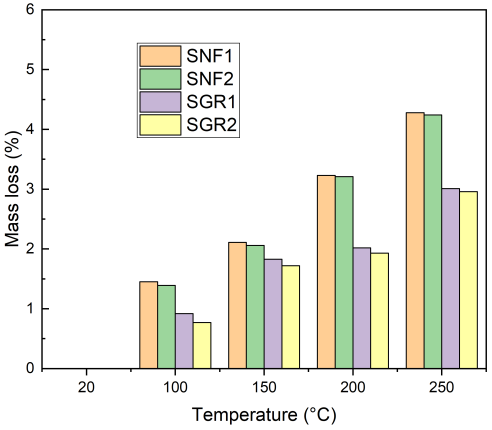
Figure 1. Mortar mass loss as a function of temperature.
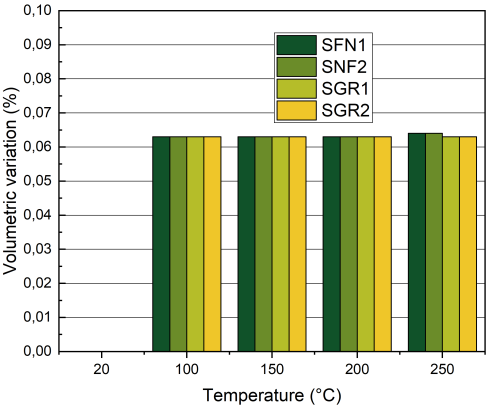
Figure 1 above shows the evolution of mass loss for mortars prepared with fine sands (SNF1 and SNF2) and coarse sands (SGR1 and SGR2), heated to temperatures of 100, 150, 200 and 250°C. It is observed that, for all these mortars, the mass loss increases with temperature. This is explained by the fact that exposure of the mortars to high temperatures leads to the evaporation of free water present in their pores, in addition to the loss of chemically bound water due to transformation reactions occurring in the mortar's microstructure. These results support those of Noumowé et al. , who demonstrated that the performance of concrete exposed to elevated temperatures is intrinsically linked to the quantity and distribution of water within the concrete. Similarly, Khaliq et al. studied the high-temperature properties of construction materials made with calcium aluminate cement and showed that the dehydration of chemically bound water is one of the causes of mass loss in concrete or mortars.
Furthermore, it is observed that, at all temperatures, mortars made with fine sands lose more mass (1.39% to 4.28%) than those made with coarser sands (0.77% to 4.24%). This could be attributed to the fact that fine sands have a higher specific surface area (10.5×10⁻⁴ m2/g) than coarse sands (5.2×10⁻⁴ m2/g), thus allowing them to retain more water, which subsequently evaporates and contributes to the mass loss.
3.2. Volumetric Variation of Specimens
Figure 2. Volumetric Variation of Specimens as a Function of Temperature.
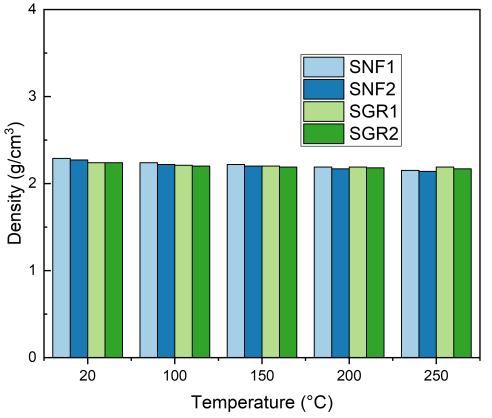
The histogram above presents the evolution of the volumetric variation of mortar specimens formulated with fine sands (SNF1 and SNF2) and coarse sands (SGR1 and SGR2) at temperatures of 100, 150, 200, and 250°C. It is observed that the volumetric variations for all mortars are minimal and very similar (0.064%), regardless of the temperature. This suggests that the volumetric stability of mortars exposed to different temperatures is primarily governed by the thermal properties of the cement paste rather than those of the aggregates. In other words, the volumetric variation of the mortar specimens is largely insensitive to the sand particle size distribution. This conclusion aligns with studies conducted by Miličević et al. , who showed that for temperatures ranging between 20°C and 400°C, the volumetric variation of concrete is highly negligible. However, their densities evolve in the opposite direction to the temperatures: as the temperature increases, the density decreases, as illustrated in Figure 3 below. This decrease in density is attributed to the loss of water and the dehydration of the cement hydrates. This observation was also noted by Fares .
Figure 3. Mortar density as a function of temperature.
3.3. Water Absorption by Immersion
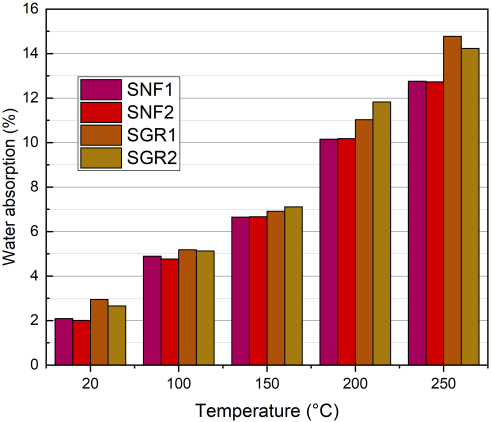
Figure 4. Mortar Water Absorption Rate by Immersion as a Function of Temperature.
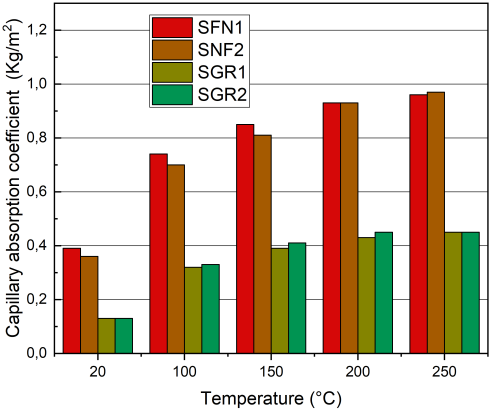
Figure 4 shows the evolution of the water absorption rate by immersion for mortars formulated with sands of different particle size distributions, subjected to temperatures of 20, 100, 150, 200 and 250°C. The results show that the water absorption rate increases with temperature. This is explained by the fact that the evaporation of free water creates increasingly larger void spaces, allowing water to penetrate the mortar. Furthermore, the absorption rate of mortars formulated with coarse sands (2.95%−14.78%) is higher than that of mortars formulated with fine sands (2.01%−12.73%), regardless of the temperature. This superiority is justified because mortars made with coarse sands exhibit larger pores than those made with fine sands, making them susceptible to absorbing more water when fully immersed. This observation was also noted by Brige Dublin with mortars composed of sands of different PSDs at ambient temperature.
Between 20°C and 150°C, the mortar water absorption rate varies little, from 2.01% to 6.67% for fine sands and 2.95% to 7.11% for coarse sands, indicating that the porous structure of the mortars is almost unchanged. In contrast, beyond 150°C, the water absorption rate varies substantially, between 6.67% to 12.76% for fine sands and 7.11% to 14.78% for coarse sands. According to Hager , this is linked to the dehydration process that occurs in the C-S-H gel, which increases the porosity of the cementitious matrix.
3.4. Water Absorption by Capilarity
Figure 5. Capillary water absorption as a function of temperature.
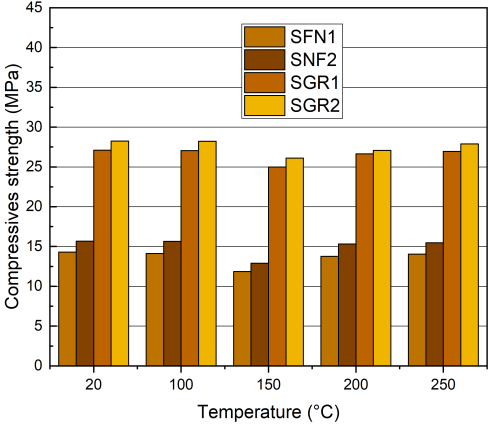
Figure 5 above shows the evolution, as a function of temperature, of the coefficient of capillary water absorption for mortars prepared with sands of different particle size distributions. It is observed that the water absorption coefficient for all mortars increases positively with temperature. This increase is faster between 20°C and 100°C due to the evaporation of water that previously occupied the pores.
Furthermore, it is noted that the water absorption coefficients for mortars formulated with fine sands (0.36−0.97 kg/m2) are, at all temperatures, higher and almost double those formulated with coarser sands (0.13−0.45 kg/m2). This is justified by the fact that fine sands, owing to the fineness of their grains, exhibit a higher number of interconnected, smaller pores which allows them to absorb more water through capillary suction. This finding was also observed by HARBI et al. in their study on the physicochemical and durability properties of mortars based on brick waste.
3.5. Compressive Strenght
Figure 6. Mortar compressive strength as a function of temperature.

Figure 6 illustrates the evolution of the compressive strength of mortars subjected to various temperatures. It is observed that, regardless of the temperature, the compressive strengths of mortars prepared with coarse sands are significantly superior to those of mortars prepared with fine sands. This result is explained by the fact that coarse sands possess a higher fineness modulus than fine sands. These conclusions align with those of Y. Djepaze II et al. , who demonstrated the effect of particle size distribution on mortar compressive strength. Other research also confirms these findings. It is easily understood here that the temperature does not affect the compressive strength of mortars made with coarse sands to the extent that it becomes inferior or equal to that of mortars made with fine sands.
Furthermore, it is noted that at 150°C, the compressive strength of all mortars decreases. For mortars prepared with coarse sands, the reduction is 7.28% to 7.57%. For mortars prepared with fine sands, the reduction is 17.21% to 17.61%. This decrease indicates the evaporation of free water and a portion of the chemically bound water after exposure to an elevated temperature, consequently leading to an increase in porosity. Khoury attributed this reduction to the decrease in the Van der Waal cohesive forces between the C-S-H layers. The work of HACHEMI confirms these results, showing that the compressive strength of mortars decreases at 150°C.
4. Conclusions
The objective of this work was to study the influence of sand particle size distribution (PSD) on the behavior of mortars exposed to temperatures of 20, 100, 150, 200, and 250°C. Four sands of the same mineralogy two fine (SFN1 and SFN2) and two coarse (SGR1 and SGR2) were used to prepare the mortars. These mortars were then subjected to the aforementioned temperatures, and after cooling, the mass loss, volumetric variation, density, water absorption rate by immersion, capillary water absorption rate, and compressive strength were determined. The findings are summarized as follows:
1) Mortars prepared with fine sands lose more mass than mortars prepared with coarse sands, irrespective of the exposure temperature.
2) The volumetric variation of the mortar specimens is largely independent of the sand and also of the different temperatures to which the mortars were subjected.
3) Mortars prepared with fine sands consistently exhibit lower densities than those prepared with coarse sands, regardless of the temperature.
4) Mortars prepared with fine sands absorb less water by immersion than those prepared with coarse sands, regardless of the temperature.
5) Mortars prepared with fine sands absorb more water by capillarity than those prepared with coarse sands.
6) Mortars prepared with fine sands present lower compressive strengths at all temperatures compared to those prepared with coarse sands.
In summary, this study highlights that sand particle size distribution is a key parameter that modulates the durability and performance of mortars in hot environments. The observed differences in mass loss and water absorption mechanisms have direct implications for the design of mortars intended for applications where they might be exposed to elevated temperatures. Future research could fcus on microscopic porosity analysis to gain a deeper understanding of these mechanisms.
Abbreviations

SNF1

Fine Natural Sand No. 1

SNF2

Fine Natural Sand No. 2

SGR1

Reconstitued Coarse Sand No. 1

SGR2

Reconstitued Coarse Sand No. 2

Conflicts of Interest
The authors declare no conflicts of interest.
References
[1] CIMBéton, Concretes: Formulation, Manufacturing, and Implementation, Paris, Janvier 2013.
[2] DJEDID Tarek, «Effect of river sand substitution with quarry sand on the durability of concretes based on different Algerian cements in chemical environments» Ph.D. dissertation, 08 Jan. 2020.
[3] Beixing, W. Jiliang, Z. Mingkai, «Effect of limestone fines content in manufactured sand on durability of low and high-strength concretes», Construction and Builfing Materials, August 2009.
[4] MEZIANE El Hadji, «Study of the mechanical properties and durability of concrete based on crushed sand» Ph.D. dissertation, 11 Feb. 2016.
[5] N. Ahn, «An Experimental Study on the Guidelines for Using Higher Contents of Agregate Microfines in Portland Cement Concrete», PhD. Dissertation, 2000.
[6] H. N Ngugi, Mutuku, R. N Gariy, «Effects of Sand Quality on Compressive Strength Of Concrete: A case of Nairobi County and Its environ Kenya», Open Journal of Civil Engineering, vol. 4, pp. 255-273, 2014.
[7] Topçu B. and Uurlu A., «Effect of the use of mineral filler on the properties of concrete», Cement and concrete research, vol. 33, pp. 1071- 1075, 2003.
[8] JP. Gonçalves, LM. Travares, RD Toledo, EMR Fairbian, «Comparaison of natural an manufactured fine aggregate in cement mortars», Cement and Concrete, vol. 37, pp. 929-932, 2007.
[9] R. Dupain, R. Lanchon, J. C Saint-Arronan, Aggregates, soils, cements and concretes: Characterization of civil engineering materials by laboratory tests, Paris: CASTEILLA, 2009.
[10] G. A Khoury, «Compressive strength of concrete at high temperature: a reassessment», Magazine of Concrete Research, vol. 44, pp. 291-309, 1992.
[11] Y. Djepaze II, B. Kabgonbé, A. Balo, «Influence of the fineness Modulu of Sand on the compressive Strengthof its corresponding Mortar: A Mathematical proposal Model», Science and Technology Publishing, vol. 4, July 2020.
[12] Yalley PP and Sam A, «Effect of Sand Fines and Water/ Cement Ratio on concrete properties», Civil Engineering Research Journal, vol. 4, n° 13, 05 Avril 2018.
[13] V. L Bonavetti, E. F Irassar, «The effect of stone dust content in sand», Cement and Concrete research, vol. 24, n° 13, pp. 590, 1994.
[14] M. Ezziane, L. Molez, I. Messaoudene, T. Kadri,, «Non-destructive characterization of mortars reinforced with fibers of different nature subjected to high temperature» NoMaD, vol. 17, 2015.
[15] Xing Z., Beaucour A-L., Hebert R., Noumowé A., «Aggregate's influence thermophysical concrete properties at elevated temperature», Construction and Builfing Materials, vol. 95, pp. 18-28, 2015.
[16] S. Hachemi and A. Ounis, «The influence of sand nature on the residual physical and mechanical properties of concrete after exposure to elevated temperature», European Journal of Environmental and Civil Engineering, vol. 19, n° 17, 2017.
[17] Xing Z., Beaucour A-L., Hebert R., Noumowé A., «Influence of the nature of aggregate on the behaviour of concrete subjeted to elevated temperature», Cement and Concrete Research, vol. 41, pp. 392-402, 2011.
[18] Van Thai NGUYEN, «Behavior of ordinary and high-performance concretes subjected to high temperature: Application to large specimens» Ph.D. dissertation, 19 Jul. 2013.
[19] Y. PEI, «Effects of heating on cementitious materials - Impact of self-healing on transfer properties» Ph.D. dissertation, 5 Dec. 2016.
[20] ISO/TR 15655, «Fire resistance - Tests for thermophysical and mechanical properties of structural materials at elevated temperatures for fire engineering design», 2003.
[21] NBN EN 15-215, Testing hardened concrete—Water absorption by immersion, 1994.
[22] NF EN 13057, Tests for hardened concrete: Test methods—Determination of capillary absorption, 2002.
[23] NF EN 12390-3, Testing hardened concrete: compressive strength of test specimens, 2009.
[24] A. N Noumowé, P. Clastres, G. Debick, J. L Costaz, «Transient heating effect on high strength concrete», Nulcear Engineering and Design, vol. 166, pp. 99-108, 1996.
[25] Xing Z., Beaucour A-L., Hebert R., Noumowé A., «High temperature material properties of calicum aluminate cement, Concrete», Construction and Building Materials, vol. 94, pp. 475-487, 2015.
[26] Miličević I., Štirmer N., Banjad Pečur I., «Residual mechanical properties of concrete made with crucshed clay bricks and roof tiles aggregate after exposure to high temperature», Materails, vol. 9, 2016.
[27] Fares H., Noumowé A., Remond S., «Self-consolidating, concrete subjected to high temperature -Mechanical and physicochemical properties», Cement and Concrete Research, vol. 39, pp. 1230-1238, 2009.
[28] Brige Dublin BOUSSA ELENGA, «Evaluation of the properties of Brazzaville sands and prediction of their geotechnical quantities» Ph.D. dissertation, 19 Oct. 2024.
[29] Hager I., Tracz T., Śliwiński J., Krzemień K., T, «The influence of aggregate type on the physical and mechanical properties of high-performance concrete subjected to high temperature», Fire and Materials, 2015.
[30] HARBI R., BENMALEK, MOHAMED L., «Physicochemical and durability properties of mortars based on brick waste"». 2015.
[31] C. Youssouf, B. Mohamed, B. Abdellatif, «The influence of the G/S ratio on the strength of coarse sand» 13 Nov. 2014.
[32] Brige Dublin B. E, AHOUET L., Okina S. N, «Evaluation of the Properties of Local Sands Used in a Cement Mortar and in the Formulation of a Standard Sand to Test the Class of Cements» Advances in Materials, vol. 12, n° 13, pp. 31-38, 2023.
[33] Venkatarama Reddy, B. V., Uday Vyas, C. V, «Influence of shear bond strength on compressive strength and stress-strain characteristics of masonry» Mater Struct, vol. 41, pp. 1697-1712, 2008.
Cite This Article
  • APA Style

    Loubouth, S. J. M., Elenga, B. D. B., Dzaba-Dzoualou, S. G., Ahouet, L. (2025). Influence of Sand Particle Size Distribution on the Properties of Mortars Subjected to Various Temperatures. Advances in Materials, 14(4), 88-94. https://doi.org/10.11648/j.am.20251405.11

    Copy | Download

    ACS Style

    Loubouth, S. J. M.; Elenga, B. D. B.; Dzaba-Dzoualou, S. G.; Ahouet, L. Influence of Sand Particle Size Distribution on the Properties of Mortars Subjected to Various Temperatures. Adv. Mater. 2025, 14(4), 88-94. doi: 10.11648/j.am.20251405.11

    Copy | Download

    AMA Style

    Loubouth SJM, Elenga BDB, Dzaba-Dzoualou SG, Ahouet L. Influence of Sand Particle Size Distribution on the Properties of Mortars Subjected to Various Temperatures. Adv Mater. 2025;14(4):88-94. doi: 10.11648/j.am.20251405.11

    Copy | Download

  • @article{10.11648/j.am.20251405.11,
      author = {Severin Jean Maixent Loubouth and Brige Dublin Boussa Elenga and Sorel Gael Dzaba-Dzoualou and Louis Ahouet},
      title = {Influence of Sand Particle Size Distribution on the Properties of Mortars Subjected to Various Temperatures
    },
      journal = {Advances in Materials},
      volume = {14},
      number = {4},
      pages = {88-94},
      doi = {10.11648/j.am.20251405.11},
      url = {https://doi.org/10.11648/j.am.20251405.11},
      eprint = {https://article.sciencepublishinggroup.com/pdf/10.11648.j.am.20251405.11},
      abstract = {The durability of concrete and mortar structures against extreme thermal stress is a major concern in Civil Engineering. This present experimental study aims to critically assess the influence of sand particle size distribution on the physico-mechanical and hydric characteristics of mortars after exposure to different temperatures. Cubic mortar specimens measuring 70 x 70 x 70 mm were manufactured using two types of sand (fine and coarse) of the same mineralogy, with a Sand/Cement ratio of 3 and a Water/Cement ratio of 0.5. The samples were subjected to five temperature levels: 20, 100, 150, 200, and 250°C. After cooling down to ambient temperature, several properties were measured, including mass loss, dimensional changes, bulk density, water absorption by immersion (total porosity), water absorption by capillarity, and compressive strengths. The results reveal a systematic influence of particle size: mortars made with fine sands exhibit a higher mass loss and consistently lower compressive strengths than those made with coarse sands, regardless of the applied temperature. In terms of hydric durability, fine sand mortars show lower water absorption by immersion (lower total porosity) but a higher absorption by capillarity, which indicates a microstructure characterized by finer but more interconnected pores, thereby favoring micro-cracking under thermal stress. In conclusion, the study demonstrates that sand particle size is a determining factor in the post-thermal performance of mortars, and the use of coarse sands is preferable to ensure better mechanical stability and increased resilience for structures exposed to temperatures up to 250°C.
    },
     year = {2025}
    }
    

    Copy | Download

  • TY  - JOUR
    T1  - Influence of Sand Particle Size Distribution on the Properties of Mortars Subjected to Various Temperatures
    
    AU  - Severin Jean Maixent Loubouth
    AU  - Brige Dublin Boussa Elenga
    AU  - Sorel Gael Dzaba-Dzoualou
    AU  - Louis Ahouet
    Y1  - 2025/10/31
    PY  - 2025
    N1  - https://doi.org/10.11648/j.am.20251405.11
    DO  - 10.11648/j.am.20251405.11
    T2  - Advances in Materials
    JF  - Advances in Materials
    JO  - Advances in Materials
    SP  - 88
    EP  - 94
    PB  - Science Publishing Group
    SN  - 2327-252X
    UR  - https://doi.org/10.11648/j.am.20251405.11
    AB  - The durability of concrete and mortar structures against extreme thermal stress is a major concern in Civil Engineering. This present experimental study aims to critically assess the influence of sand particle size distribution on the physico-mechanical and hydric characteristics of mortars after exposure to different temperatures. Cubic mortar specimens measuring 70 x 70 x 70 mm were manufactured using two types of sand (fine and coarse) of the same mineralogy, with a Sand/Cement ratio of 3 and a Water/Cement ratio of 0.5. The samples were subjected to five temperature levels: 20, 100, 150, 200, and 250°C. After cooling down to ambient temperature, several properties were measured, including mass loss, dimensional changes, bulk density, water absorption by immersion (total porosity), water absorption by capillarity, and compressive strengths. The results reveal a systematic influence of particle size: mortars made with fine sands exhibit a higher mass loss and consistently lower compressive strengths than those made with coarse sands, regardless of the applied temperature. In terms of hydric durability, fine sand mortars show lower water absorption by immersion (lower total porosity) but a higher absorption by capillarity, which indicates a microstructure characterized by finer but more interconnected pores, thereby favoring micro-cracking under thermal stress. In conclusion, the study demonstrates that sand particle size is a determining factor in the post-thermal performance of mortars, and the use of coarse sands is preferable to ensure better mechanical stability and increased resilience for structures exposed to temperatures up to 250°C.
    
    VL  - 14
    IS  - 4
    ER  - 

    Copy | Download

Author Information
  • Abstract
  • Keywords
  • Document Sections

    1. 1. Introduction
    2. 2. Materials and Methods
    3. 3. Results and Discussion
    4. 4. Conclusions
    Show Full Outline
  • Abbreviations
  • Conflicts of Interest
  • References
  • Cite This Article
  • Author Information